Sunday, September 20, 2009

Pomegranate Couscous


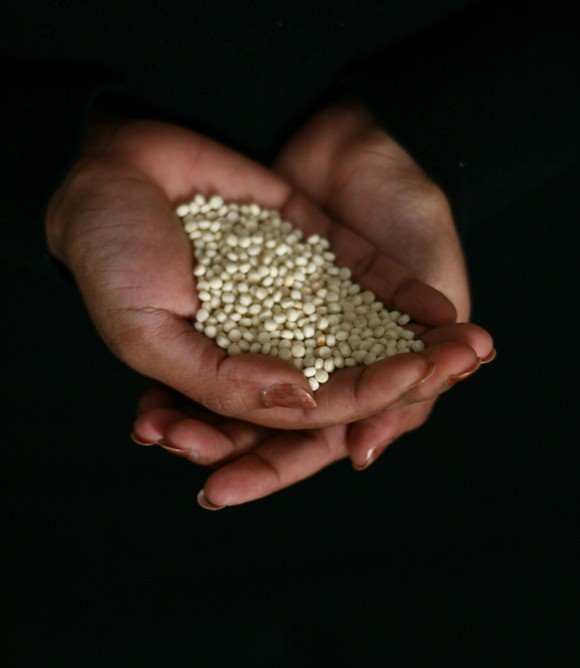
Couscous consists of small pellets of wheat used as a staple similar to rice or pasta. There are two types of couscous, both of which are used in the recipe below. What I call ‘regular’ couscous is made by creating pellets from moistened semolina coated with fine wheat flour. These are about 1mm in diameter before cooking. The other type, commonly called pearl or Israeli couscous, is about 2-3mm in diameter and is made from hard wheat instead of semolina.

Traditional couscous is hand-made and shaped in a very labor-intensive process. It is often steamed several times until cooked. In North America and Europe, one can purchase pre-steamed couscous which is easily prepared by adding boiling water. This quick-cooking version is popular because it can be prepared in five minutes with minimal fuss.

Early references to couscous date to 13th century Syria and Moorish Spain. By the 17th century it was known in Sicily, Tuscany, Rome and Brittany. Today it is a staple in the Maghreb, and is common but less popular in the Middle East, Southern Europe and among the Sephardic Jewish diaspora. While often topped with meat, fish or vegetables, it is often prepared as a dessert with some combination of nuts, sugar/honey, raisins, coconut, cinnamon, and milk/cream.

I made this couscous as a side dish for Rosh Hashanah, the Jewish New Year. It contains pomegranates which are one of the foods associated with this holiday. It was served with my Aunt Barbara’s Mediterranean chicken. To read about the significance of Rosh Hashanah, see last year’s post for honey cake.


Serves 14-16

Ingredients
4 cups chicken or vegetable stock
6 tablespoons butter
2 teaspoons salt
2 cups regular couscous
1 1/2 cups pine nuts
1 1/2 cups shallots, finely chopped
2 1/2 cups pearl (also called Israeli) couscous
4 dried bay leaves
1/4 teaspoon cinnamon
zest of 2 lemons
1 bunch parsley, finely chopped
3/4 cup golden raisins
black pepper, to taste
1 pomegranate, seeds removed

Directions1. In a large pot bring 2 cups stock, 2 tablespoons butter and 1 teaspoon salt to a boil.
2. Remove from heat, add regular couscous and cover for 5 minutes.
3. Fluff with a fork and set aside.
4. Add 2 more tablespoons butter to the pot, and over medium heat sauté pine nuts until golden brown and fragrant. Set aside.
5. Add 2 more tablespoons butter to the pot, and over medium heat sauté shallots until translucent.
6. Add pearl couscous, bay leaves and cinnamon. Stir for 5-7 minutes until the couscous browns slightly.
7. Add remaining stock and 1 teaspoon salt. Bring to a boil, then reduce the heat to low. Cover and simmer for 8-10 minutes until all the liquid has been absorbed. Make sure that the couscous is tender.
8. Remove from heat and discard the bay leaves.
9. In a large mixing bowl, combine regular couscous and pearl couscous. Add pine nuts, lemon zest, parsley, raisins, pepper and half pomegranate seeds. Mix well.
10. Serve topped with remaining pomegranate seeds.

Sunday, September 6, 2009

Mocha Ice Cream Cake

Nothing says summer like ice cream. To mark Labor Day (which was inspired by Canadian Labour Day), the unofficial end of summer in the United States, I’m offering up a recipe for ice cream cake.

I associate ice cream cake with chain stores such as Dairy Queen and Carvel. Most of these cakes consist of two layers of hard ice cream “frosted” with a soft serve ice cream. Many of them have an additional layer of cookie crumbs, nuts or candy bar pieces. Although common for children’s birthday parties, fancier versions, sometimes containing sponge cake, are now appearing at wedding receptions.

The earliest ice cream cake recipes appeared in the 1870s and took inspiration from bombes, French desserts made from ice cream and fruit in fancy molds and trifles, a British pudding consisting of sponge cake, fruit, custard and cream.

Store bought ice cream cakes can be very rich. This version allows you to reduce calories without giving up taste - the graham cracker crust is made with yogurt instead of butter and frozen yogurt or reduced fat ice cream can be used. For a recent ice cream cake I used Stonyfield Farm’s non-fat After Dark Chocolate frozen yogurt and Starbucks coffee ice cream. The combination of low fat and full fat layers was a healthy and delicious compromise.


Serves 8-12

Ingredients
2 cups graham cracker crumbs
5 teaspoons unsweetened cocoa powder
3 tablespoons granulated sugar
2 teaspoons instant coffee granules
4 to 6 tablespoons plain or coffee-flavored yogurt (reduced fat acceptable)
1 pint chocolate ice cream or frozen yogurt (reduced fat acceptable)
1 pint coffee ice cream or frozen yogurt (reduced fat acceptable)
1/4 to 1/3 cup chocolate chips (optional)
whipped cream (optional), for serving

Directions
1. Line a 9-inch springform pan with parchment paper. Coat inside with cooking spray.
2. In a medium bowl mix graham cracker crumbs, cocoa, sugar, coffee granules and yogurt and mix well until incorporated.
3. Press mixture into the bottom of the pan. Chill in the freezer for 15 minutes.
4. Soften chocolate ice cream at room temperature and spread evenly over crust. Chill in freezer for 15 minutes.
5. Soften coffee ice cream at room temperature and spread evenly over chocolate ice cream layer. Sprinkle with chocolate chips (optional). Chill in freezer for at least 1 hour.
6. When ready to serve, use a butter knife to cut around edges of pan.
7. Gently release the side of the pan. Allow cake to sit at room temperature for 5 minutes. If cake is melting, put back into freezer to firm up.


8. Slice cake with a warm serrated knife. Serve with whipped cream (optional).
9. Any uneaten cake can be refrozen for up to one month. For easier storage, cut cake into pieces and freeze individually or in groups wrapped in foil or in tupperware.

Wednesday, August 12, 2009

Thai Tea Ice Cream


Denizens of Thai food restaurants are familiar with super sweet, orange-colored iced tea. In this recipe, my friend Yvonne transforms the refreshing Thai beverage into ice cream.

Thai ice tea is made from strongly brewed black tea which may be supplemented with orange blossom water, food coloring, star anise, and/or crushed tamarind seed. The Black tea is sweetened and mixed with one or more of the following: condensed milk, evaporated milk, whole milk or coconut milk. In the United States, Thai ice tea is generally served in a tall glass; in Thailand it is more often seen in a to-go clear plastic bag with a straw sticking out.

This photograph shows profiteroles filled with Thai tea ice cream. Watch this space for a post about how to make this and other choux pastry treats.


Serves 4 to 6

Ingredients
4 cups heavy cream (can substitute up to half with whole milk)
Thai tea (1/4 cup loose leaves in a tea sock or 3 teabags)
3/4 to 1 cup granulated sugar
1 to 2 eggs yolks, beaten (optional)

Directions
1. In a large saucepan over low heat, warm cream and/or milk.
2. After mixture is warm add Thai tea and sugar and infuse for 20 or 30 minutes until mixture is a rich salmon color. Stir occasionally. Taste and extend infusion for stronger flavor and add additional sugar to taste.
3. Add egg yolks to produce a richer and less icy ice cream. Add eggs to warm mixture and stir until it thickens.
4. If necessary, strain mixture through a fine sieve to remove any stray tea leaves.
5. Pour into a glass bowl and chill overnight in the refrigerator.
6. Then transfer to an ice cream maker and follow manufacturer’s instructions.

Wednesday, July 29, 2009

Spinach and Farmer Cheese Curry (Palak Paneer)

Palak paneer is a South Asian curry made of palak (spinach) and paneer (Indian cheese). It is popular throughout Northern India and Pakistan, especially in the Punjab region where it is a common vegetarian dish.
Spinach is thought to have originated in Nepal, and through Muslim conquests and trade, was spread to China by 647, and later Spain and other parts of the Muslim world. Spinach was a favorite vegetable of Catherine de' Medici of Florence, Italy, and to this day dishes served on a bed of spinach are referred to as a la Florentine.

The world’s largest producer of spinach is China, followed by the United States. California grows almost three quarters of the vegetable produced in this country.

Spinach is considered to be highly nutritious as popularized by the American cartoon Popeye. Although high in iron and calcium, the type of iron spinach contains (non-heme) as well as high levels of oxalate render these minerals difficult to absorb. In addition, the vegetable contains high levels of Vitamins A, B9, C and K. These are highest in fresh or steamed spinach; cooked or boiled spinach has dramatically lower levels of these vitamins and minerals. In fact, cooked broccoli and cauliflower have twice the iron of cooked spinach.

Fresh spinach loses its nutritional value the longer it is stored. Research also shows it to be one of the most heavily pesticide-contaminated vegetables. In addition, it has been the vector for recent E. coli and salmonella outbreaks.

Despite these nutritional limitations and health concerns, which I must admit were largely unknown to me before writing this posting, palak paneer is a tasty and filling curry. It will last up to five days in the refrigerator.


Serves 6 to 8

Ingredients
2 pounds chopped frozen spinach
5 tablespoons vegetable oil
10 - 14 ounces paneer, cut in 1/2 inch cubes (or use extra firm tofu)
2 teaspoons garlic paste or minced garlic
3 teaspoons ginger paste or minced ginger
2 teaspoons cumin seeds
1 large onion, chopped
1 teaspoon of salt, or to taste
2 medium tomatoes, finely chopped
1/2 teaspoon of cayenne or chilli powder
2 tablespoons coriander powder
2 teaspoons garam masala
1/2 teaspoon turmeric
up to 1 cup full or low fat sour cream (optional)
1/4 cup fresh cilantro leaves

Directions
1. Defrost spinach in the microwave according to package instructions. Set aside to cool. Do not remove excess water.
2. Heat half the oil in a large cooking pot on medium-low. Add paneer and cook for 5 minutes, stirring occasionally, until light golden brown. Set aside. If using tofu it may take longer to brown.
3. Add the remaining oil and garlic, ginger and cumin seeds. After 3 minutes add onion and salt, and sauté for 5 minutes on medium heat until translucent. Add the tomatoes and continue cooking for 5 more minutes.
4. Transfer onion/tomato mixture to a blender and process for 30 seconds. Add a little water if necessary. Return to pot and add cayenne/chilli powder, coriander, garam masala and turmeric.
5. Mix thoroughly and simmer on low.
6. Transfer spinach to the blender (in more than one batch if necessary). Blend for 30 seconds until mixed. If necessary, add 1/2 to 1 cup of water.
7. Pour contents back into pot and mix well. Add sour cream and paneer and heat until bubbling.
8. Garnish with fresh cilantro. Serve warm with rice or bread (chappatis, parathas or naan).